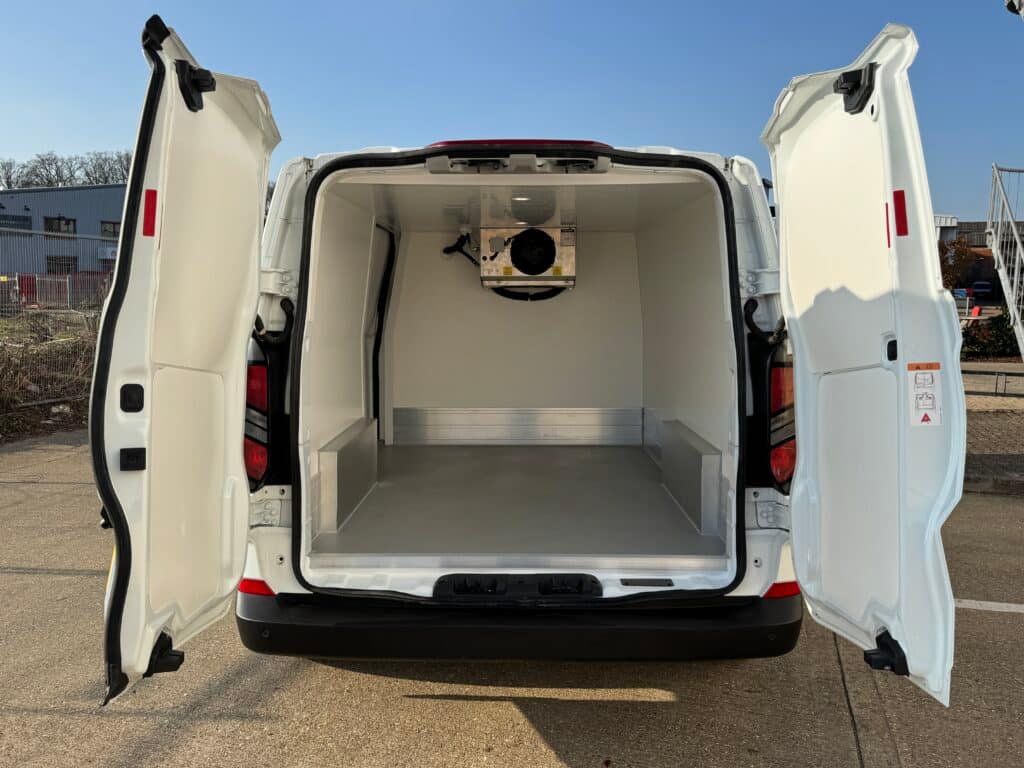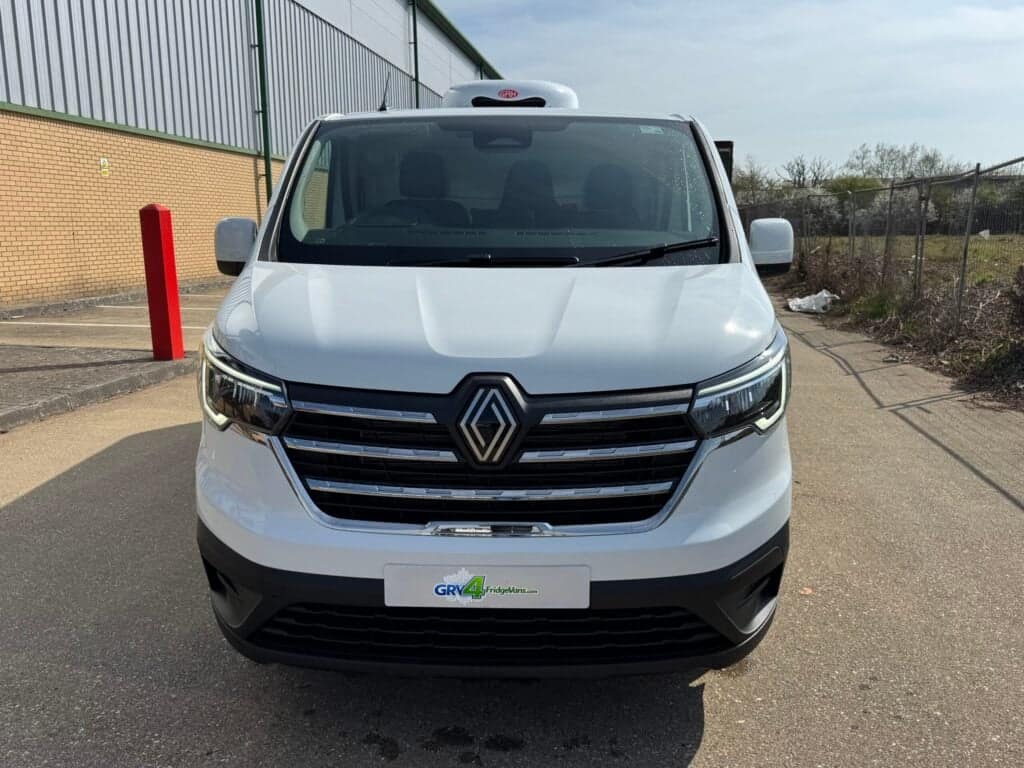
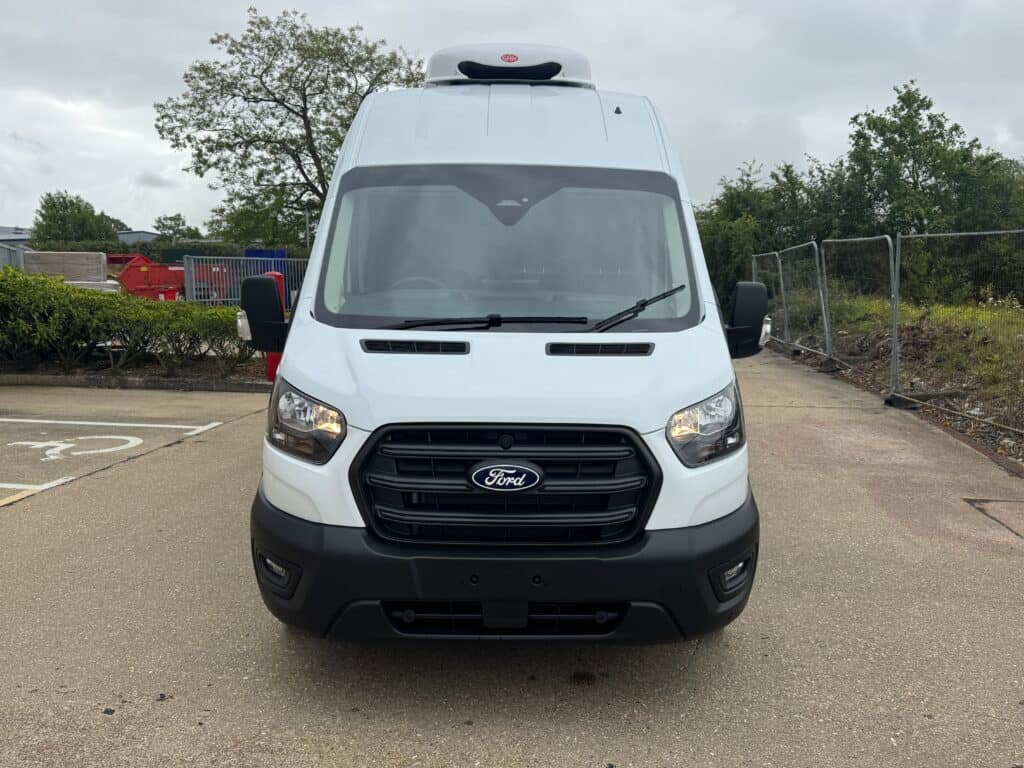
A fridge van that won’t hold temperature isn’t always a broken fridge. A lot of the time it’s the doors, the load or a setting. Work through these five checks first. They take minutes and cost nothing.
1. Doors, seals and curtains
Every time the doors open, warm air pours in and the unit has to pull the load space back down.
- Seals: look for splits, flattened sections and gaps, especially at the bottom corners. Close the door on a sheet of paper. If it slides out easily, the seal isn’t doing its job.
- Strip curtains: check none are missing, torn or too short to reach the floor.
- Door habits: on a multi-drop round, open the doors only as long as you need to and shut them between trips to the back.
Worn seals also let water into the lining over time, which is a bigger problem. See common problems with refrigerated vans.
2. How you loaded it
Often this isn’t a fault at all. A van fridge unit is built to hold food at the temperature it was loaded at. It is not built to cool warm food down. Thermo King and Carrier both say the same in their own guidance (Thermo King, Carrier Transicold).
- Pre-cool the van: run the unit with the doors shut until the load space is at temperature, then load. The walls and floor hold heat too.
- Load cold food only: product should already be at the right temperature when it goes in.
- Unit off with the doors open: both manufacturers advise switching the unit off while the doors are open for loading. Running it with the doors open pulls in warm, damp air and builds frost.
- Don’t block the airflow: keep stock clear of the evaporator (the unit inside the load space) and leave gaps so air can move around the load. A van packed to the roof can’t circulate air, however good the unit is.
3. The condenser
The condenser is the part outside the load space that gets rid of the heat. If it’s clogged with dirt, leaves or road grime, the unit can’t shed heat and struggles, worst of all on a hot day.
- Look at the fins. They should be clean and straight, with daylight through them.
- Check nothing is blocking the fan, and that it spins when the unit is running.
- Clean gently. A pressure washer at close range can flatten the fins. If you’re not sure, leave it to the engineer at the next service.
4. Frost on the evaporator
Open the doors and look at the evaporator. A thin, even frost can be normal. A solid block of ice is not. Ice stops air passing through, so the unit runs but the load space doesn’t get cold.
- Run a defrost if your unit has a manual defrost. The handbook will show you how.
- Ask why it iced up. Loading with the unit running and the doors open, worn seals and damp product are the usual culprits.
- If it ices up again quickly after a defrost, that’s one for the engineer.
5. Settings and power
- Set point: check the controller is set to the temperature you need. It sounds obvious, but a chiller set to 8°C will hold 8°C, not 3°C. The guidance is to aim for 5°C or below for chilled food (GOV.UK).
- Standby: if the van’s parked with the engine off, is the standby lead plugged in, switched on at the socket and the unit switched to standby? No power, no cooling. See do you need electric standby?
- Warning lights and codes: write down any code on the controller before you ring anyone. It saves the engineer time.
When to call an engineer
Stop checking and call a refrigeration engineer if:
- The unit isn’t running at all, or keeps cutting out.
- It runs constantly but the load space never gets cold.
- You see oily marks around the pipe joints or hear hissing. Those can be signs of a refrigerant leak.
- Ice keeps coming back on the evaporator straight after a defrost.
- The temperature wanders up and down even with the doors shut and an empty van.
Don’t top up or open the refrigerant system yourself. That’s a job for a qualified engineer.
If the van can’t hold temperature with food on board, move the food to another cold store and record what you did. See starting a food delivery round: the checklist.
Keep it serviced
Most of these problems are found early at a service. Follow the service schedule in your unit’s handbook. A hard-working van may be due sooner than you think. Keep the records too: they matter for warranty and when you sell. See how long does a fridge unit last?
Every used van we sell has been checked by our own engineers and comes with a warranty on the van (what’s left of the maker’s, or 12 months, which can be extended), plus 12 or 24 months on the fridge unit.
Still stuck, or wondering if it’s time to change the van? Call us on 01444 245555 or send us an enquiry.