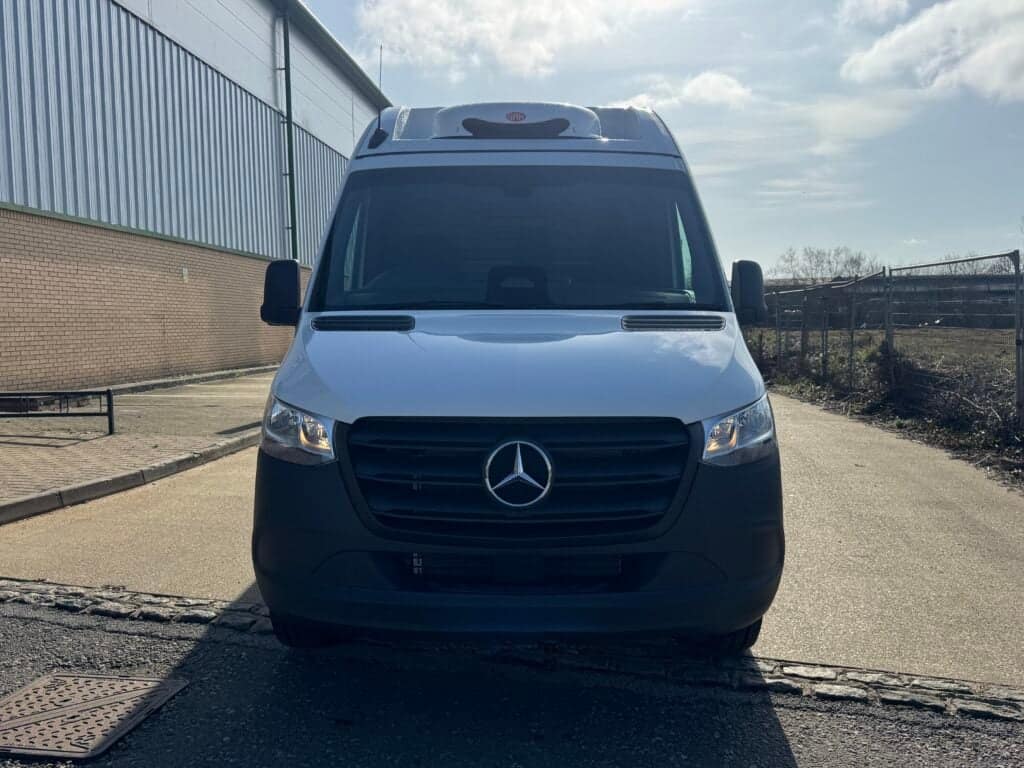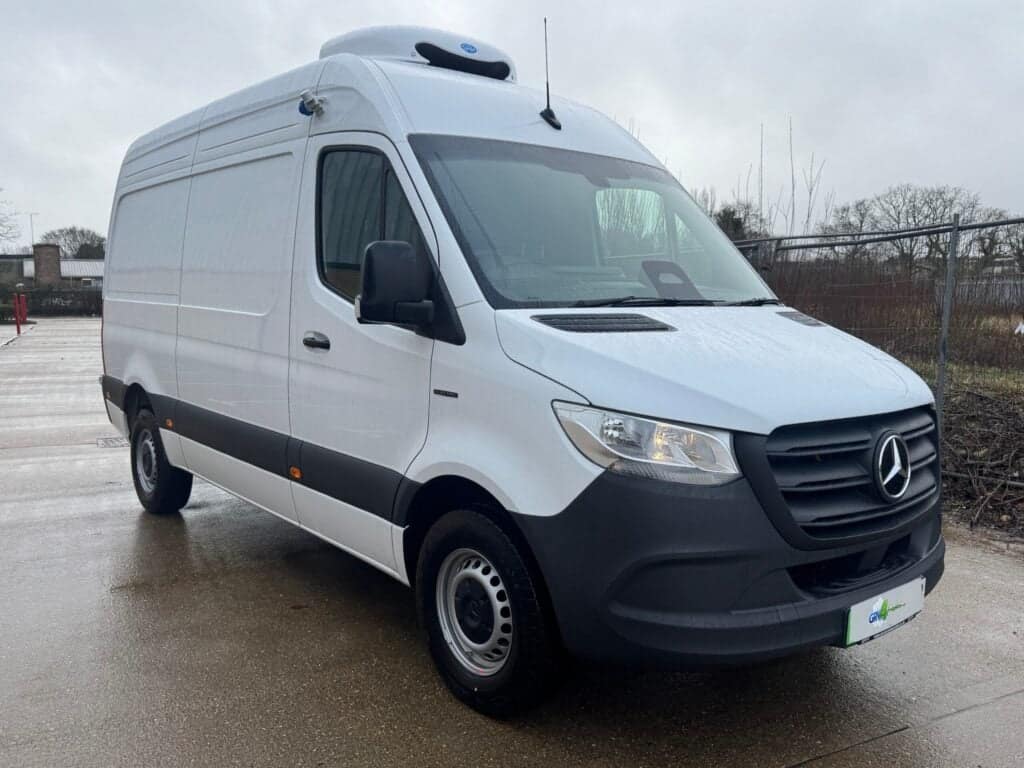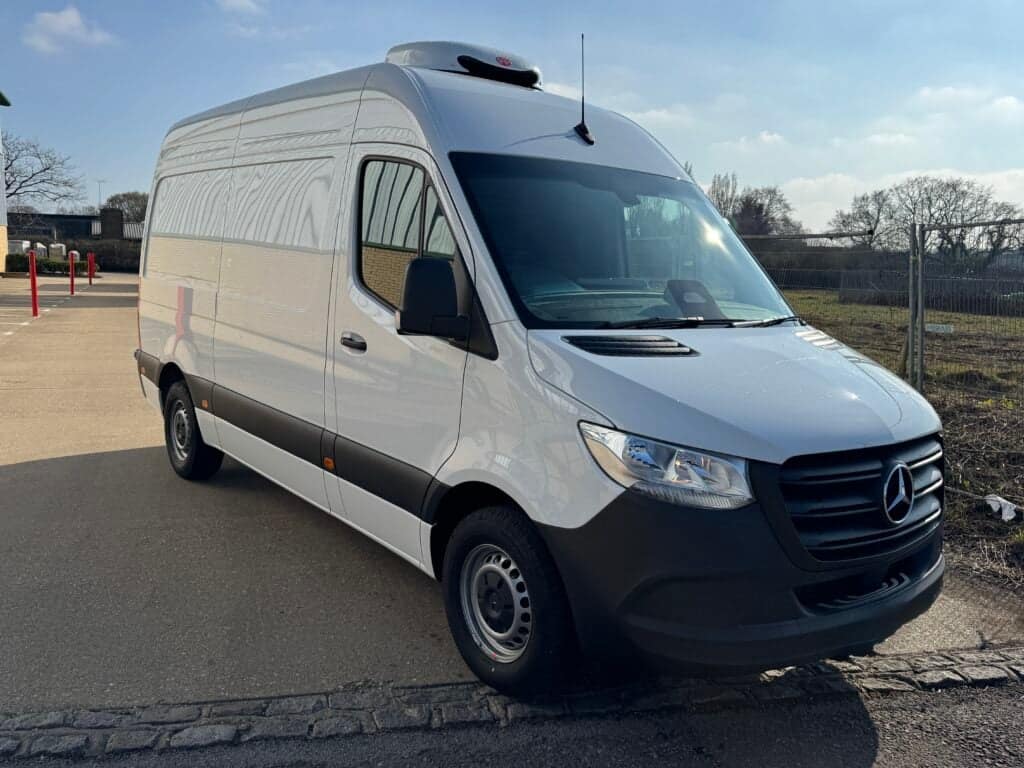
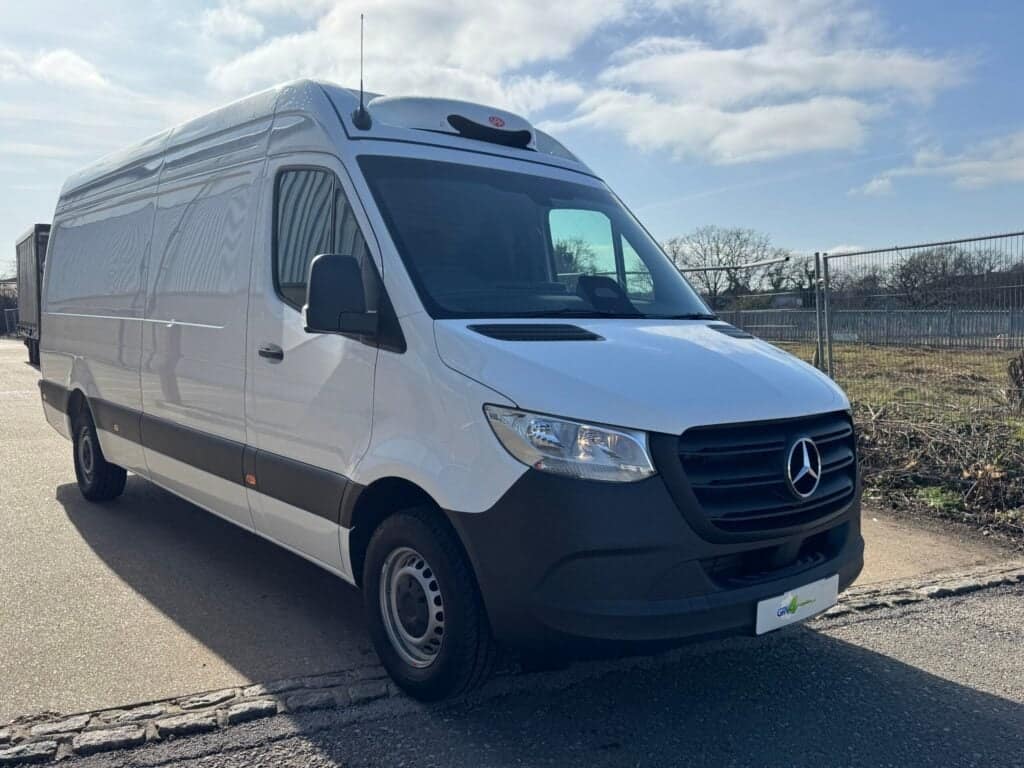
A refrigerated van is an ordinary van with two things added: insulation to keep heat out, and a refrigeration unit to take heat away. Here’s how the parts work together, from a business that has been converting and selling them since 1976.
1. The insulated lining
An empty van gets hot fast in the sun and freezing cold on a winter night, because a metal panel lets heat straight through. The conversion lines the load space with insulation: 50mm for a chiller and 75mm for a freezer. It slows heat getting in (or out), so the fridge unit can hold the temperature without working flat out. It also gives you a smooth, hygienic surface that’s easy to clean.
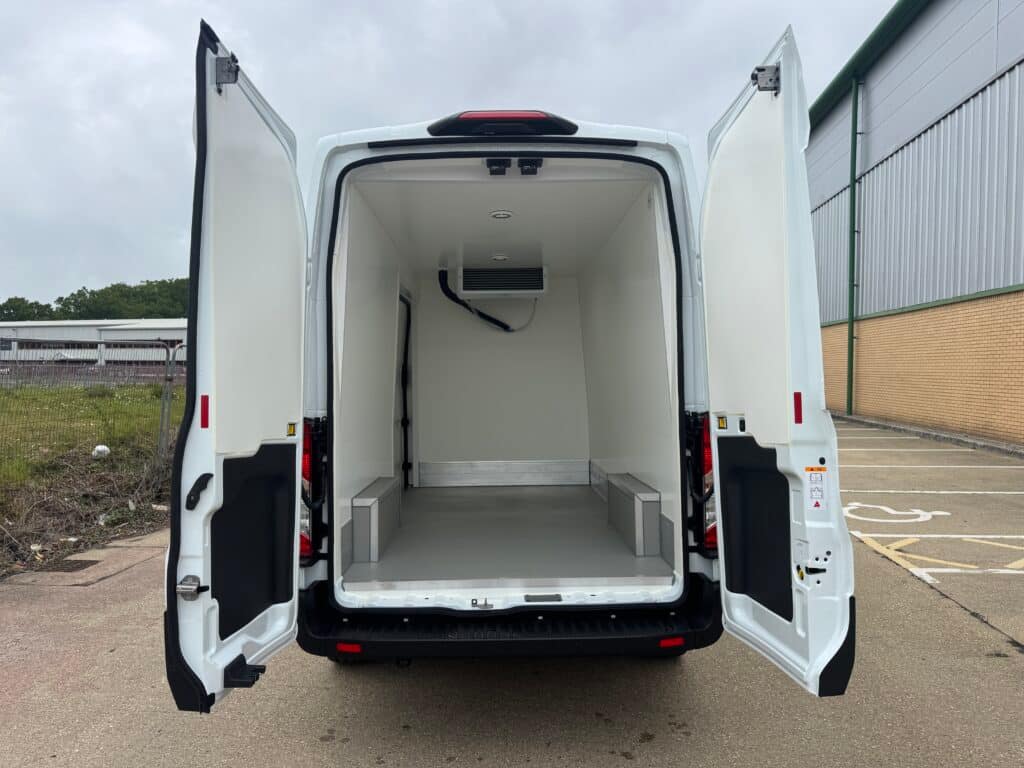
2. The refrigeration unit
A fridge van works the same way as the fridge in your kitchen. A refrigerant gas is pumped round a sealed circuit by a compressor:
- inside the load space, the evaporator lets the refrigerant absorb heat from the air, and fans blow the cooled air round the load;
- outside, usually on the roof, the condenser gets rid of that heat into the open air.
On a standard unit the condenser sits proud on the roof. A recessed condenser pod sits it down into the roofline instead, for a lower van with less drag. We fit units from GAH, Thermo King, Hubbard and Zanotti, and depending on the unit our vans can work anywhere from +21°C down to -25°C.
3. How it’s powered
- Road only: the standard setup. The unit runs while the van’s engine runs, which suits vans that are moving most of the day.
- Electric standby: a different unit that can also run from a mains supply with the engine off, so the van can be loaded the night before or parked on a pitch all day. It must be specified before the conversion. See do you need electric standby?
- Electric vans: an electric van can be converted like any other. See electric fridge vans.
4. Controls and records
A controller in the cab sets the temperature and shows the reading in the load space. A load temperature recorder can print a receipt as evidence the goods were held at the right temperature. A unit with heating holds the temperature both ways, warming the load space on a freezing morning as well as cooling it in summer.
5. One temperature or two
A fixed or moveable bulkhead splits the load space into two compartments, so one van can carry chilled and frozen goods, or chilled and ambient. See chiller van or freezer van?
What keeps it working
- Doors shut: every time they open, warm air gets in. Curtains across the doorway hold the cold in at each drop.
- Airflow: don’t pack the load against the evaporator; the cold air has to reach the whole load space.
- A dry, undamaged lining and good door seals: water in the lining stops the insulation working.
- Servicing: skipped services and dirty condensers are what kill fridge units early.
More in common problems with refrigerated vans and how long does a refrigerated van last? Ready to choose? See our fridge vans and freezer vans, or call us on 01444 245555.