

By GRV 4 Fridge Vans · Updated 10 October 2026
The short answer
Most butchers are best served by a chiller van (not a freezer) that is easy to wash out, big enough for your busiest day and has electric standby, so your meat stays cold overnight and when the engine’s off. Everything else comes down to how and where you deliver.
Here’s how to decide, in the order that matters.
1. Know the temperature rules
Two rules cover most of what butchers carry:
- Chilled food must be kept at 8°C or below. That’s the legal limit in England, Wales and Northern Ireland. The Food Standards Agency recommends 5°C or below, and that’s what we’d aim for.
- Fresh meat should be at 7°C or below before it’s loaded and stay there during the journey. Offal should be at 3°C or below. That comes from the meat hygiene rules.
Your local Environmental Health Officer has the final say on your business, so check with them if you’re unsure.
A good fridge van holds a steady temperature with the doors opening and closing all day. That depends on the fridge unit, the insulation and the size of the unit for the van. We’ll tell you what each van is rated for.
2. Choose the right size
| Size | Typical vans | Suits |
|---|---|---|
| Small | Citan, Kangoo, Transit Connect | A shop with a small delivery round, easy to park in town |
| Medium | Transit Custom, Trafic, Vito | The most popular for butchers: enough space for a full round and still easy to drive |
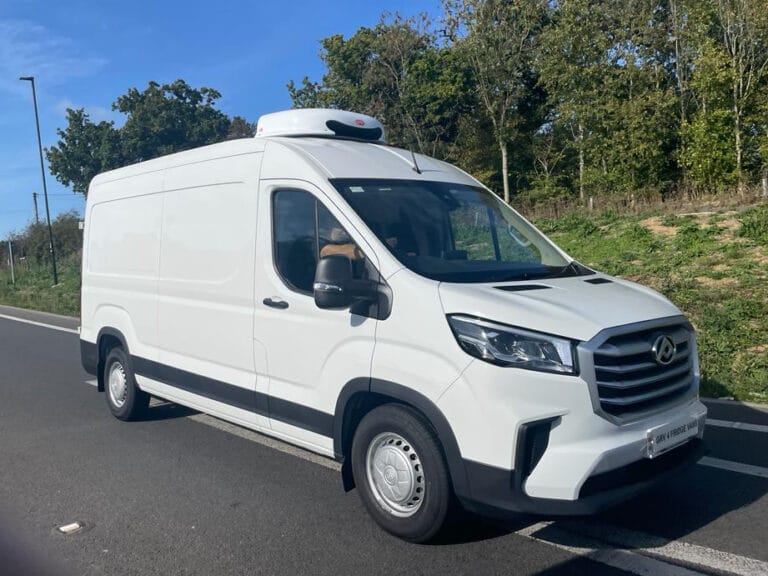
| Large | Sprinter, Master, Crafter | Wholesale, restaurant and catering supply, and very busy rounds |
Think about your busiest day, not an average one: Christmas, a bank holiday weekend, a big catering order. A van that’s too small costs you sales. One that’s too big costs you fuel and tax.
Check the payload. Fridge equipment adds weight, so a fridge van carries less than the same van as a plain panel van. Ask any seller for the van’s actual weighed payload, not the manufacturer’s figure for the empty base van. We’ll tell you the payload of any van we sell.
3. A clean, hard-wearing inside
Meat means washing out. Look for:
- Smooth, wipe-clean walls and floor (our conversions use GRP lining) with no gaps for dirt to hide
- A floor that copes with water and cleaning chemicals
- Interior fittings to suit you, such as meat rails and shelving. Ask us about these: they’re not on every van.
4. Electric standby
A fridge unit normally runs off the van’s engine. Electric standby lets you plug the van in overnight or at the yard to hold the temperature without the engine running. For meat, it’s worth having: it means you can pre-chill the van before loading and keep stock cold if you’re parked up.
5. New or used?
- Used is the better value for most butchers, and usually quicker. All our used vans come with a warranty: 12 or 24 months, depending on the fridge unit.
- New gets you exactly the size, fridge unit and extras you want, built to your spec.
- Finance is available, and we take part-exchanges.
6. A short checklist before you buy
- Chiller or freezer? (Most butchers need a chiller.)
- What size for your busiest day?
- What’s the real payload?
- Is the inside easy to wash out?
- Does it have electric standby?
- Is there a warranty on the van and the fridge unit?
- Who services it, and how quickly can you get help if it fails?
See our butchers’ vans
Not sure which suits you? Call us on 01444 245555 and tell us what you carry and where you deliver. We’ll tell you straight which van fits, and if we haven’t got the right one, we’ll find it.