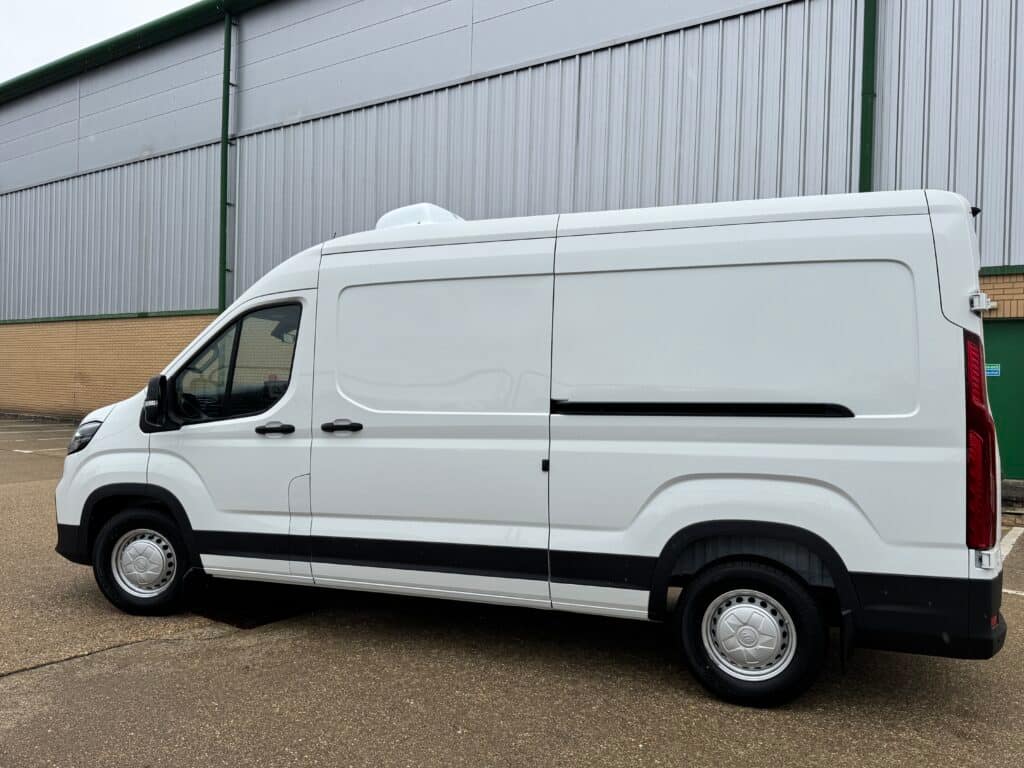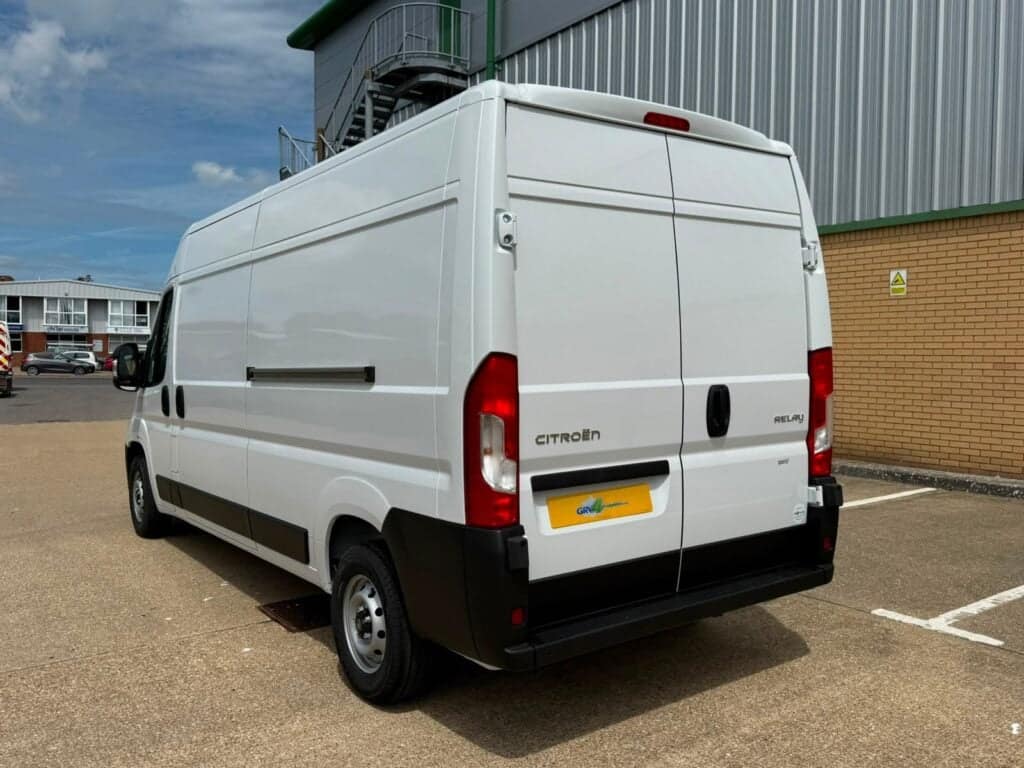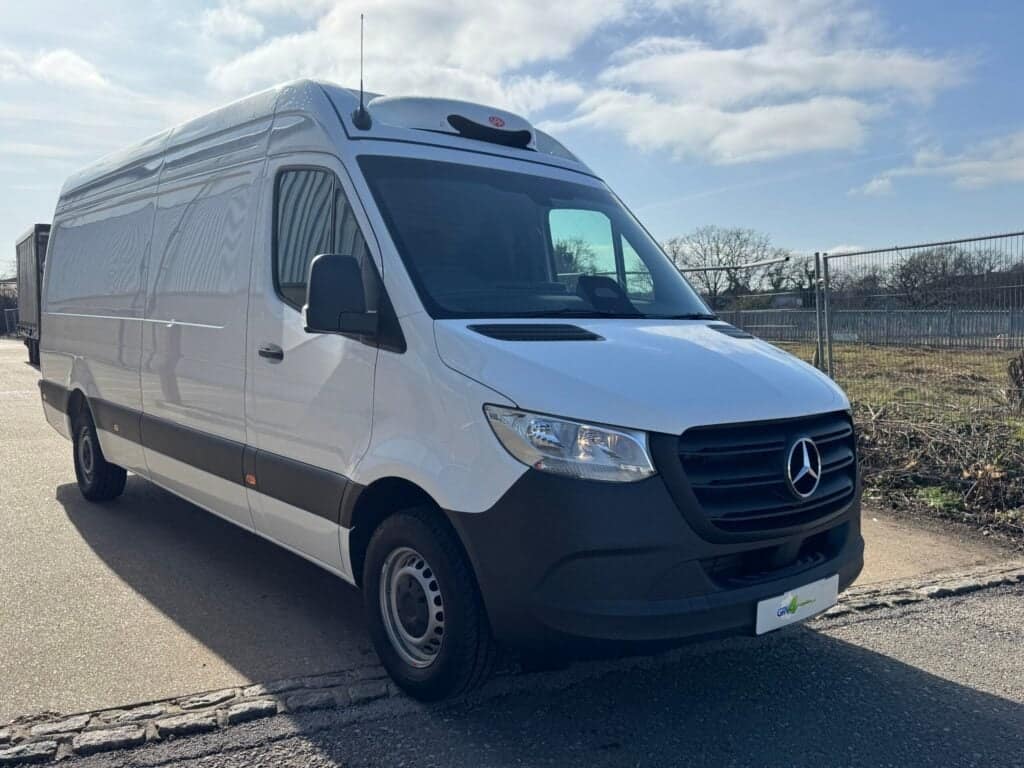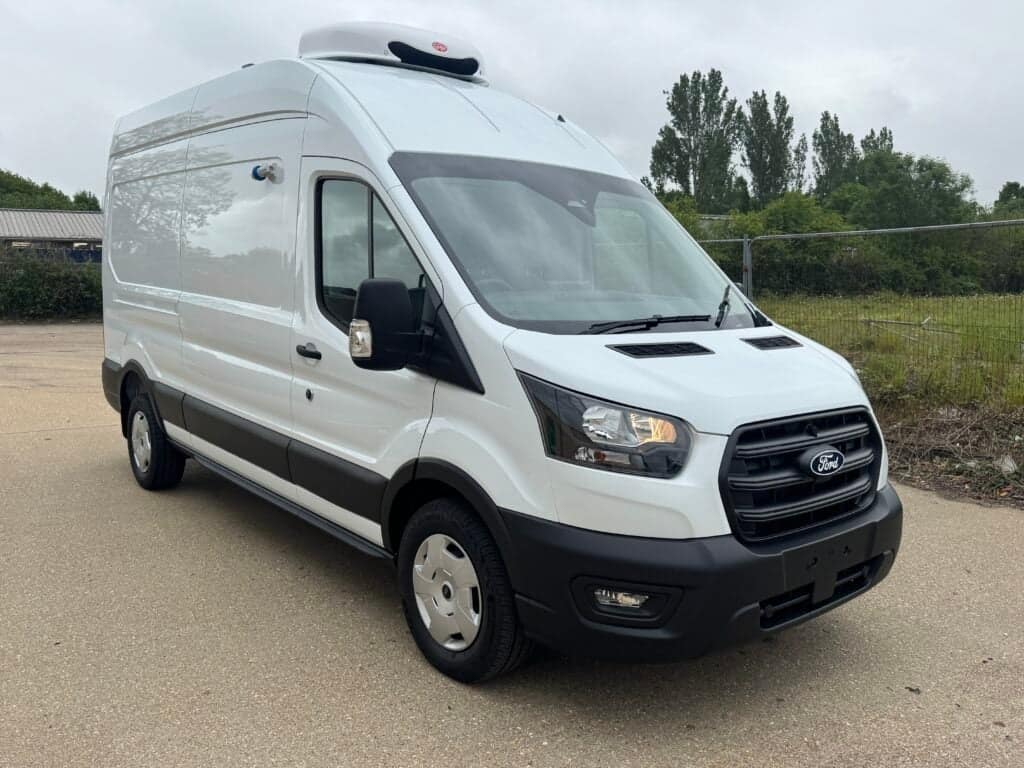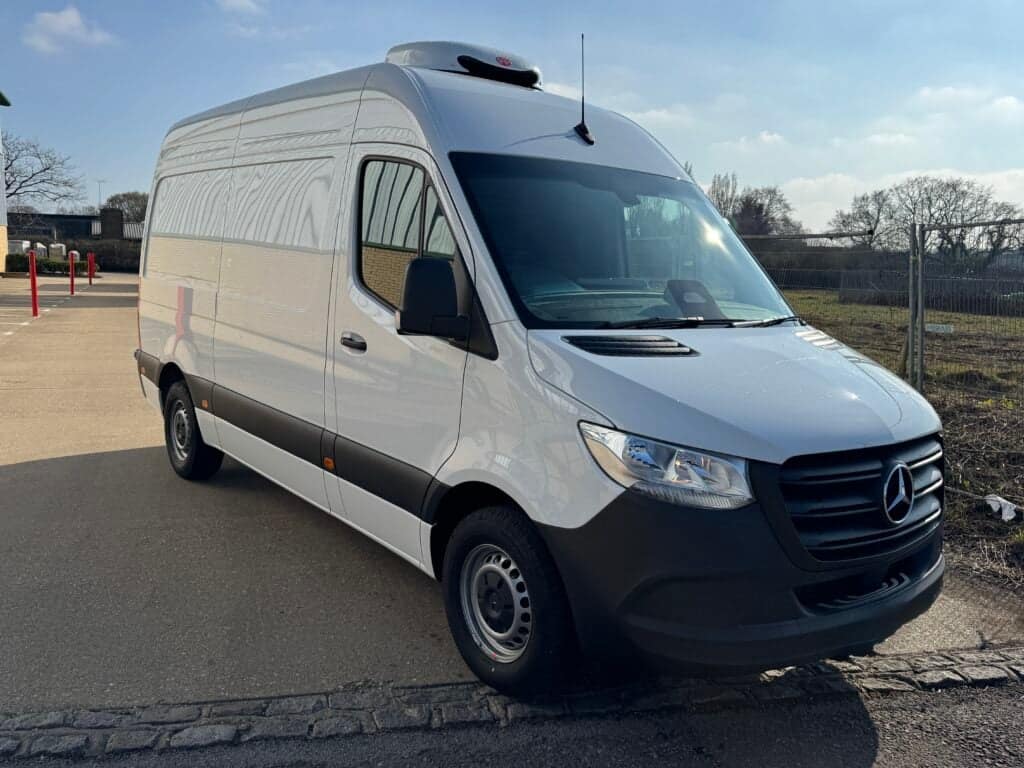
Every refrigerated van starts life as an ordinary van. The conversion is what turns it into something that can carry chilled or frozen goods safely. Here’s what a conversion involves, why businesses do it, and what to weigh up first.
What a conversion involves
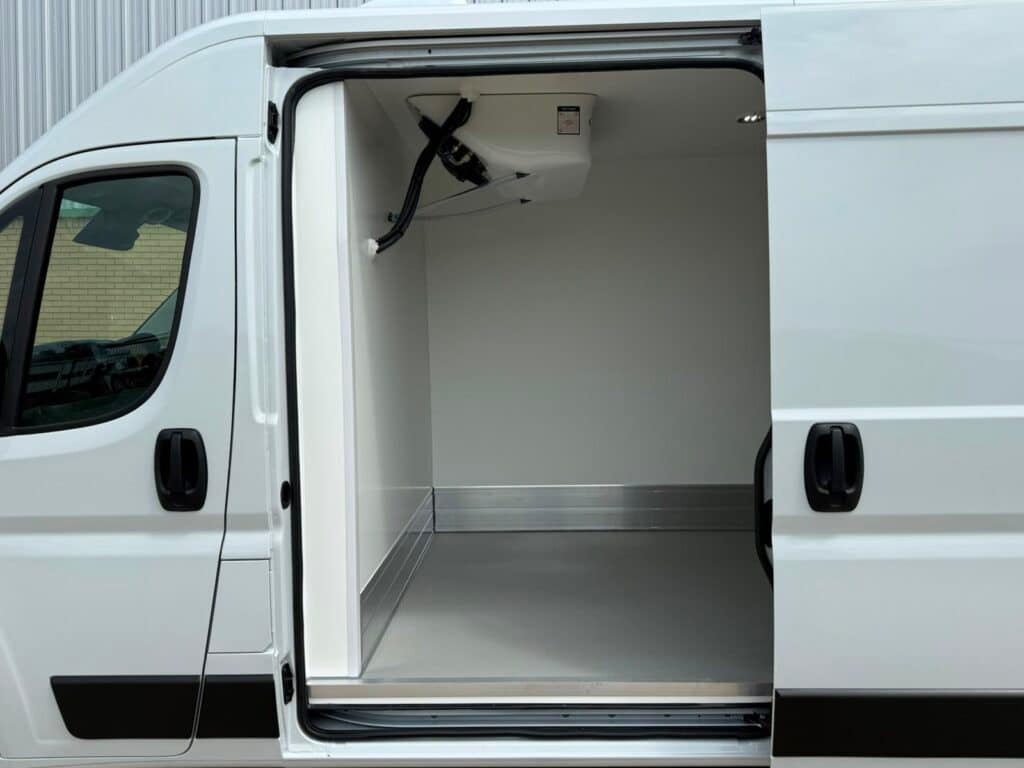
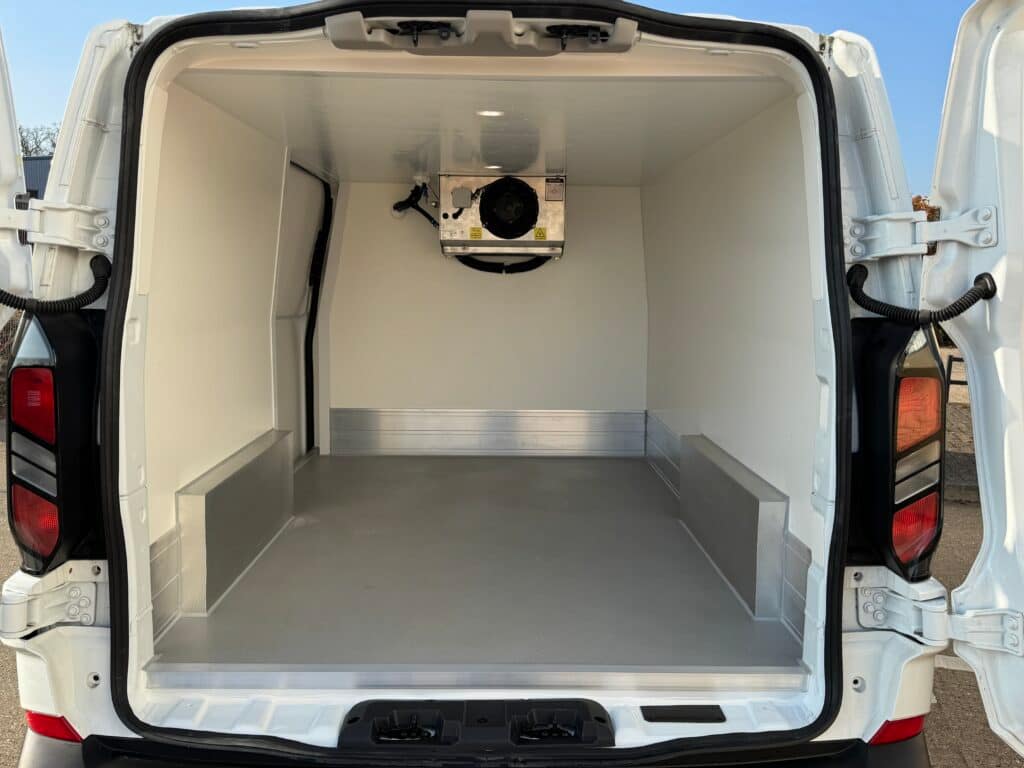
- An insulated lining in the load space: 50mm for a chiller, 75mm for a freezer. It keeps the cold in and gives you a smooth, easy-to-clean interior.
- A refrigeration unit, from GAH, Thermo King, Hubbard or Zanotti, set up for the temperature you need: anywhere from +21°C down to -25°C depending on the unit.
- The extras you choose: electric standby, curtains, shelving, a bulkhead, a slab side door on a freezer.
A conversion takes 7 to 10 days from the van arriving with us, and sometimes less depending on stock.
Why convert a van?
Carry what the law says must be kept cold
Chilled food must be kept at 8°C or below by law in England, Wales and Northern Ireland, and frozen food at -18°C or colder. For anything more than a few cool boxes, that means a refrigerated van.
Reach more customers
Without temperature control, perishable goods limit how far you can go and how long the round can be. With it, you can take on customers further away, more drops, and hot days.
Spec it for your work
A conversion is built around what you carry: the temperature, a bulkhead for two compartments, shelving, standby for overnight loading, curtains for multi-drop. See our accessories and the extras people wish they’d specced.
Start with the right van
We can supply the van and the conversion together, as one package with finance available. If you already know the make and model you want, tell us and we’ll tell you how it converts.
The trade-offs
- Load space: the lining takes up a little room, more on a freezer than a chiller.
- Payload: the lining and the fridge unit add weight. We check the payload left after conversion against what you carry.
- Some options are now or never: electric standby and a recessed condenser pod have to be specified before the conversion and can’t be added afterwards.
Convert new, or buy converted?
A used van is converted and checked by our engineers before delivery, with a warranty on the van (what’s left of the maker’s, or 12 months, which can be extended), plus 12 or 24 months on the fridge unit. New vans come as cancelled factory orders, or built to your spec. See new or used? and how do refrigerated vans work?
See our new fridge vans and used fridge vans, or call us on 01444 245555 to talk about a conversion.